
Carols resonate with a spirit of hope that knows no boundaries
By Paul Horsley
Your Custom Text Here
By Paul Horsley
ART SCENE
By Paul Horsley
A carol is defined simply as a familiar religious song. But at the heart of the most ancient carols is a fundamentally human message of light and life. Carols speak of hope for a brighter future during the darkest period of the year, a sentiment that is shared in all parts of the world and by all religions.
Though most of the carols we hear and sing during the holidays are Christian in origin, an increasing number are contemporary in outlook or even secular in theme. Whether we call them carols or not, most carry a message of comfort, hope, and joy.
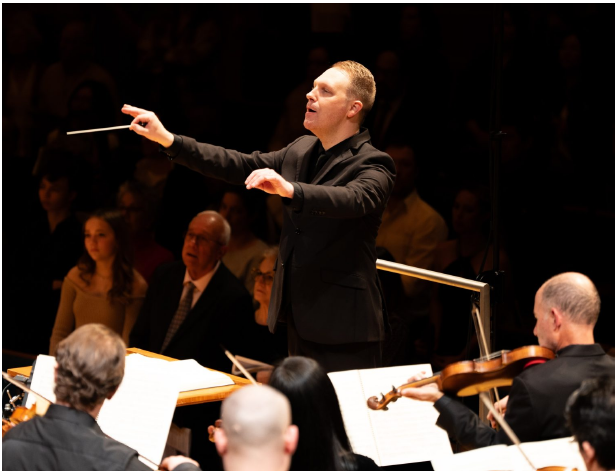
“Carols are stories, they are cultural experiences that break down social classes,” said conductor Ben Spalding, who founded the Spire Chamber Ensemble here in 2010. Ben was a student in Cambridge, England, of the great choral director, organist, and composer David Willcocks, who wrote many of the carol arrangements we hear today. “Itʼs exciting for conductors, when we program carol concerts, to be able to weave the story of what Christmas means, what the holidays mean, what the Winter Solstice means,” Ben said. Most holiday concerts involve some type of audience participation, and “if people sing anything today, they can probably sing more carols than anything else.”
Carols are not just for listening, and theyʼre not just background music at the mall. They are for singing. The act of singing together, whether in a religious context or not, is a dwindling art in America—and many believe that its loss has left a void.
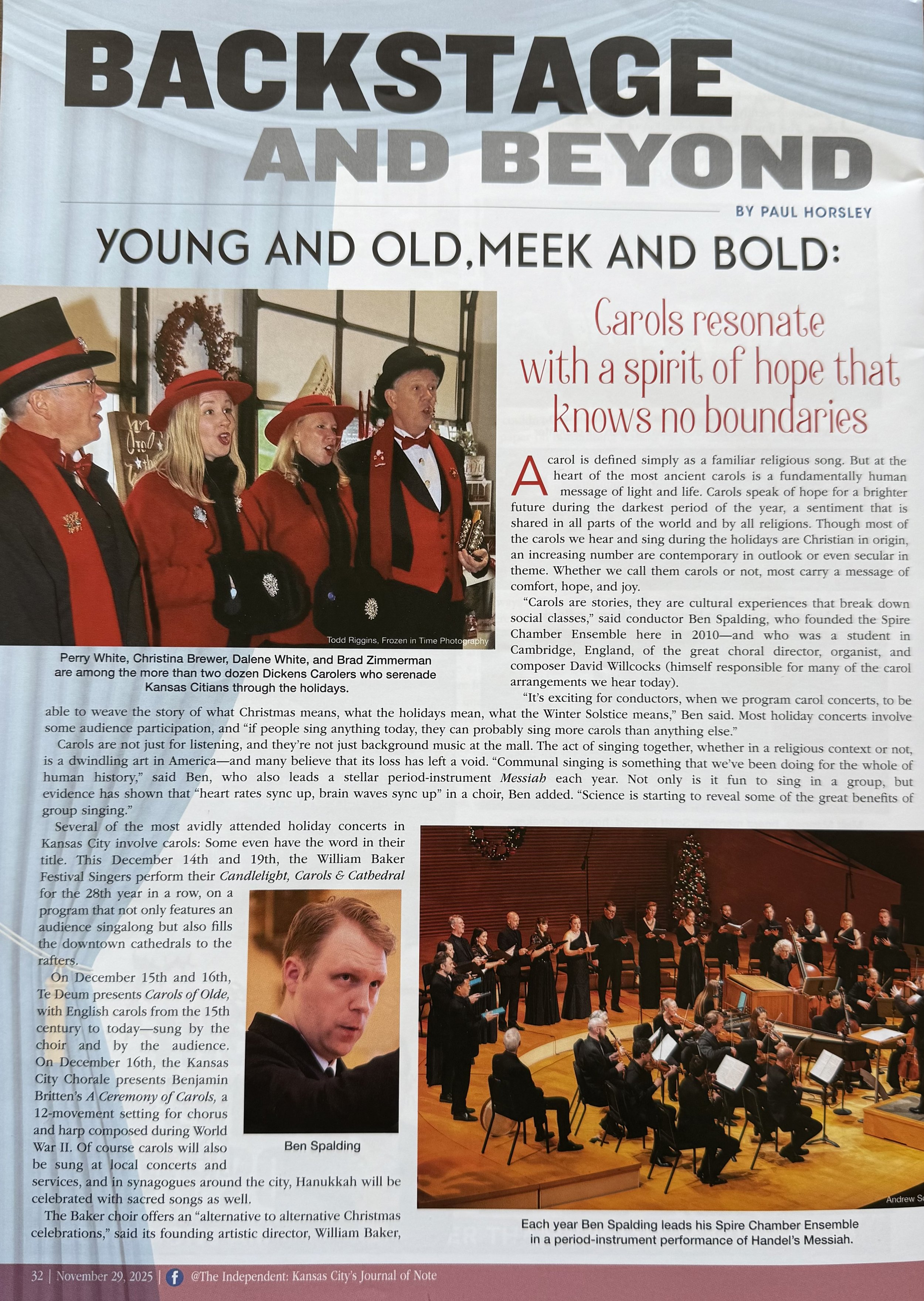
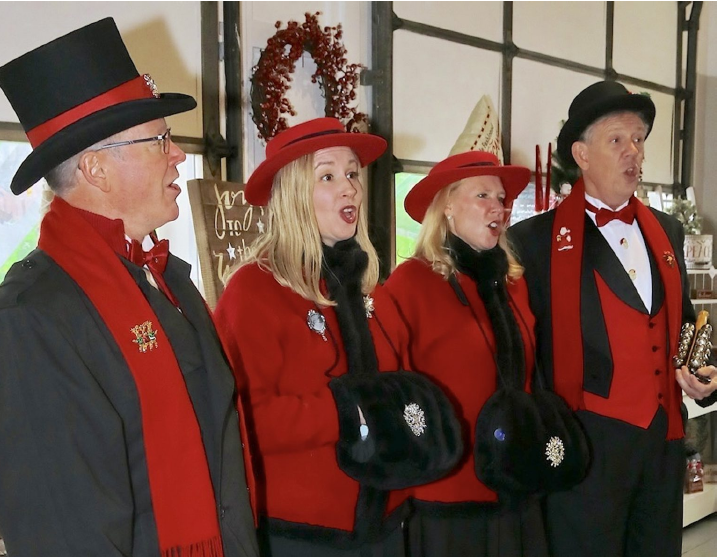
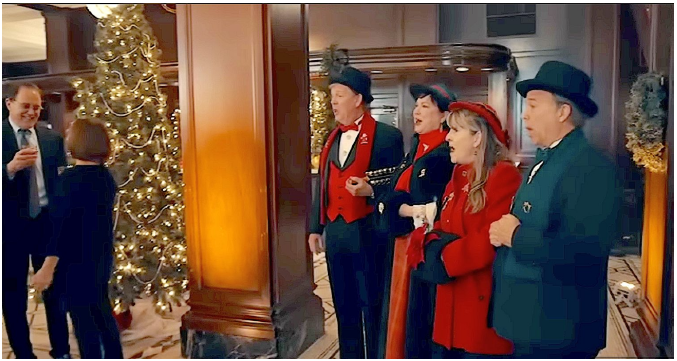
Perry White, Christina Brewer, Dalene White, and Brad Zimmerman are among the more than two dozen Dickens Carolers who serenade Kansas Citians through the holidays. / Photo by Todd Riggins, Frozen in Time Photography
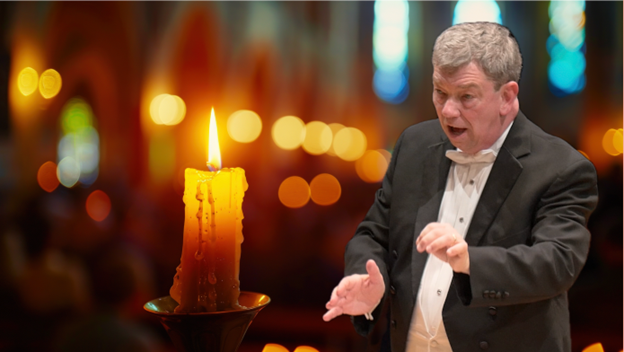
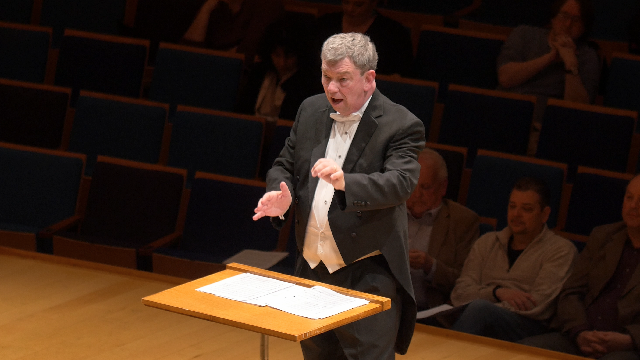
Ben Spalding leads the Spire Chamber Ensemble annually in a period-instrument performance of Handelʼs Messiah. / Photo by Andrew Schwartz
“Communal singing is something that weʼve been doing for the whole of human history,” said Ben, who also leads a stellar period instrument Messiah each year. Not only is it fun to sing in a group, but evidence has shown that “heart rates sync up, brain waves sync up” in a choir, Ben added. “Science is starting to reveal some of the great benefits of group singing.”
Several of the most avidly attended holiday concerts in Kansas City involve carols: Some even have the word in their title. This December 14th and 19th, the William Baker Festival Singers perform their Candlelight, Carols & Cathedral for the 28th year in a row, on a program that not only features an audience singalong but also fills the downtown cathedrals to the rafters.
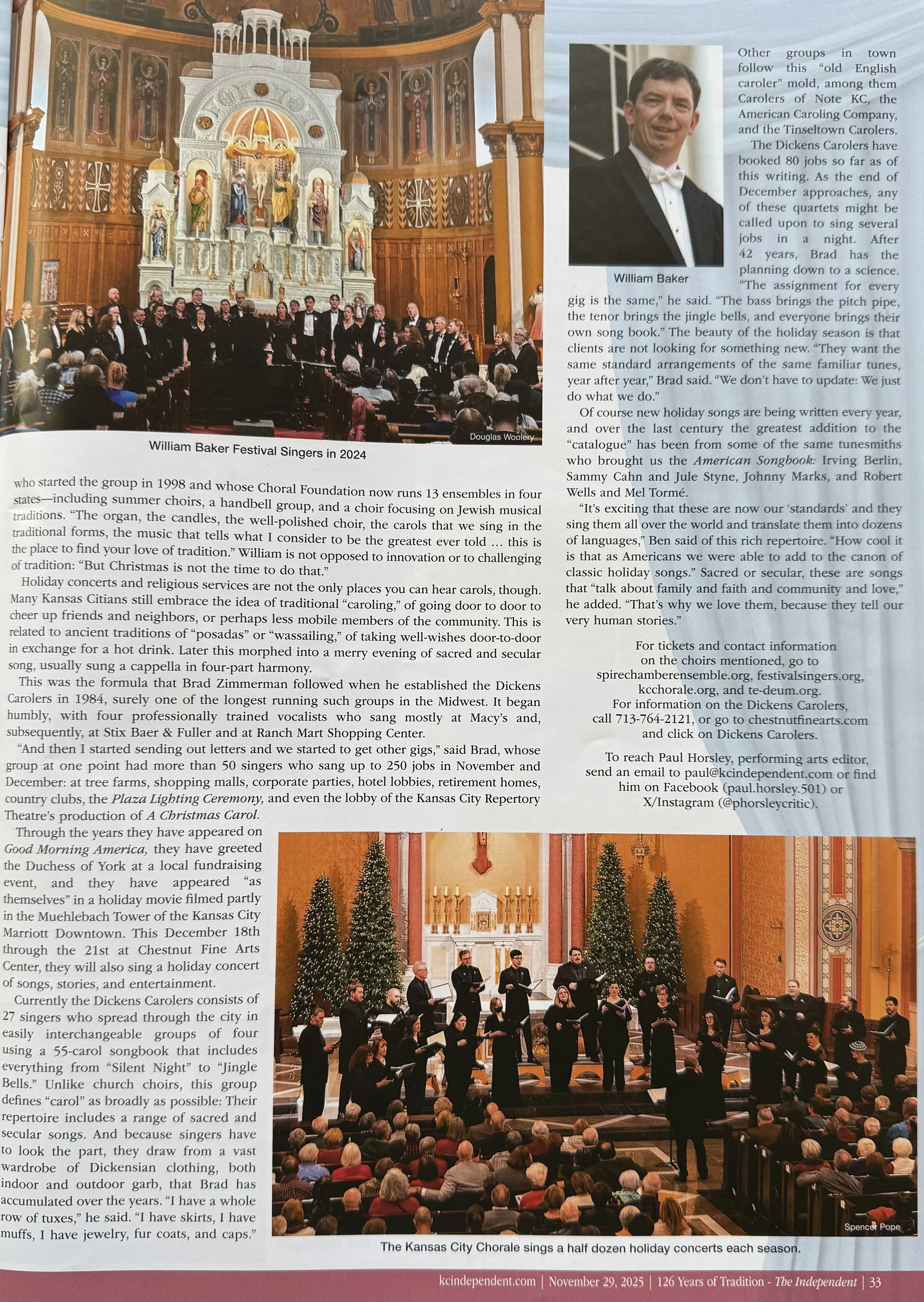
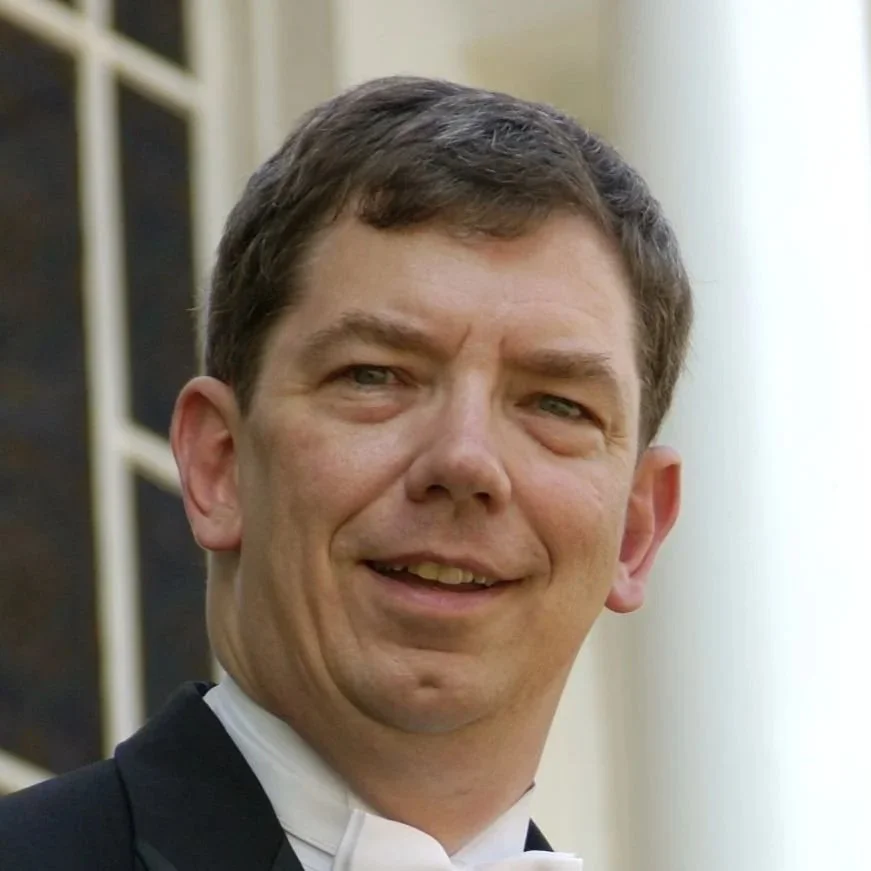
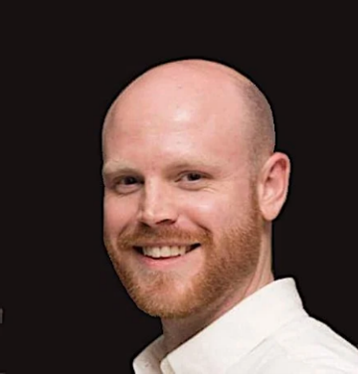
Dr. William O. Baker
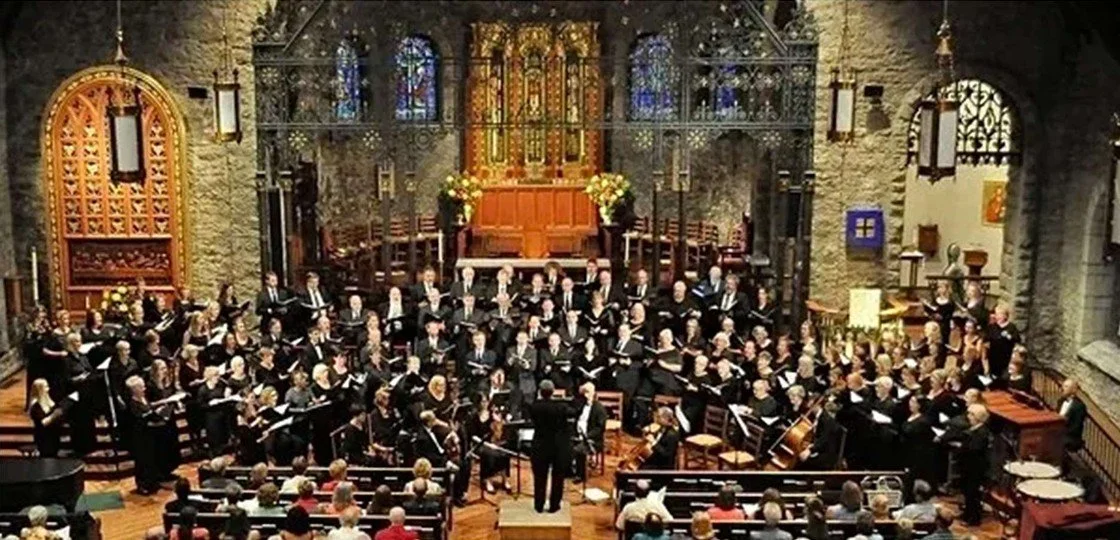
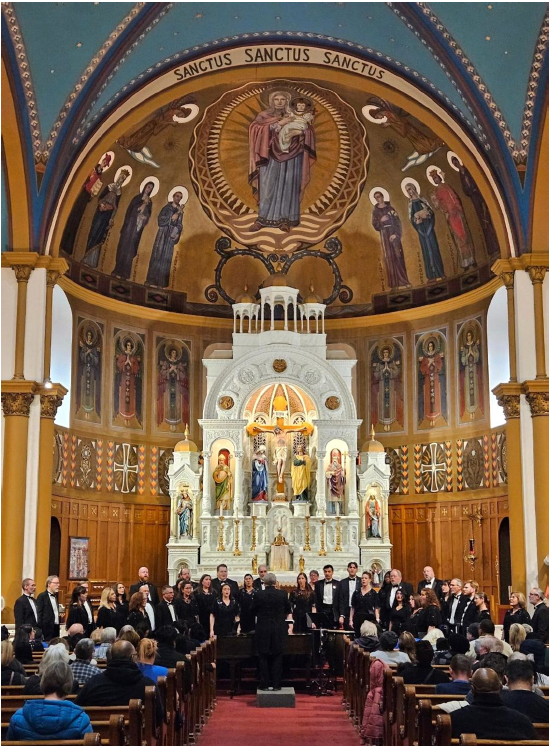
William Baker Festival Singers in 2024. / Photo by Douglas Woolery
On December 15th and 16th, Te Deum presents Carols of Olde, with English carols from the 15th century to today— sung by the choir and by the audience. On December 16th, the Kansas City Chorale presents Benjamin Brittenʼs A Ceremony of Carols, a 12-movement setting for chorus and harp composed during World War II. Of course, carols will also be sung at local concerts and services, and in synagogues around the city, Hanukkah will be celebrated with sacred songs as well.
The Baker choir offers an “alternative to alternative Christmas celebrations,” said its founding artistic director, William Baker, who started the group in 1998 and whose Choral Foundation now runs 13 ensembles in four states— including summer choirs, a handbell group, and a choir focusing on Jewish musical traditions. “The organ, the candles, the well-polished choir, the carols that we sing in the traditional forms, the music that tells what I consider to be the greatest story ever told … this is the place to find your love of tradition.” William is not opposed to innovation or to challenging tradition: “But Christmas is not the time to do that.”
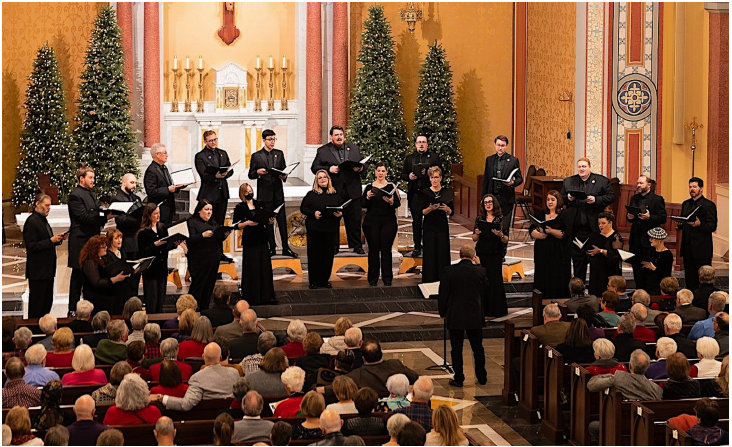
The Kansas City Chorale sings a half dozen holiday concerts each season. / Photo by Spencer Pope
Holiday concerts and religious services are not the only places you can hear carols, though. Many Kansas Citians still embrace the idea of traditional “caroling,” of going door to door to cheer up friends and neighbors, or perhaps less mobile members of the community. This is related to ancient traditions of “posadas” or “wassailing”—of taking well-wishes door-to-door in exchange for a hot drink. Later this morphed into a merry evening of sacred and secular song, usually sung a cappella in four-part harmony.
This was the formula that Brad Zimmerman followed when he established the Dickens Carolers in 1984, surely one of the longest running such groups in the Midwest. It began humbly, with four professionally trained vocalists who sang mostly at Macyʼs and, subsequently, at Stix Baer & Fuller and at Ranch Mart Shopping Center.
“And then I started sending out letters and we started to get other gigs,” said Brad, whose group at one point had more than 50 singers who sang up to 250 jobs in November and December: at tree farms, shopping malls, corporate parties, hotel lobbies, retirement homes, country clubs, the Plaza Lighting Ceremony, and even the lobby of the Kansas City Repertory Theatreʼs production of A Christmas Carol.
Through the years they have appeared on Good Morning America, they have greeted the Duchess of York at a local fundraising event, and they have appeared “as themselves” in a holiday movie filmed partly in the Muehlebach Tower of the Kansas City Marriott Downtown. This December 18th through the 21st at Chestnut Fine Arts Center, they will also sing a holiday concert of songs, stories, and entertainment.
Currently the Dickens Carolers consists of 27 singers who spread through the city in easily interchangeable groups of four using a 55- carol songbook that includes everything from “Silent Night” to “Jingle Bell.” Unlike church choirs, this group defines “carol” as broadly as possible: Their repertoire includes a range of sacred and secular songs. And because singers have to look the part, they draw from a vast wardrobe of Dickensian clothing, both indoor and outdoor garb, that Brad has accumulated over the years.
“I have a whole row of tuxes,” he said. “I have skirts, I have muffs, I have jewelry, fur coats, and caps.” Other groups in town follow this “old English caroler” mold, among them Carolers of Note KC, the American Caroling Company, and the Tinseltown Carolers.
The Dickens Carolers have booked 80 jobs so far as of this writing. As the end of December approaches, any of these quartets might be called upon to sing several jobs in a night. After 42 years, Brad has the planning down to a science. “The assignment for every gig is the same,” he said. “The bass brings the pitch pipe, the tenor brings the jingle bells, and everyone brings their own song book.” The beauty of the holiday season is that clients are not looking for something new. “They want the same standard arrangements of the same familiar tunes, year after year,” Brad said. “We donʼt have to update: We just do what we do.”
The Dickens Carolers sang in the final scenes of the 2020 Lifetime Christmas movie My Sweet Holiday.
Of course new holiday songs are being written every year, and over the last century the greatest addition to the “catalogue” has been from the some of the same tunesmiths who brought us the American Songbook: Irving Berlin, Sammy Cahn and Jule Styne, Johnny Marks, and Robert Wells and Mel Tormé.
“Itʼs exciting that these are now our ‘standardsʼ and they sing them all over the world and translate them into dozens of languages,” Ben said of this rich repertoire. “How cool it is that as Americans we were able to add to the canon of classic holiday songs.” Sacred or secular, these are songs that “talk about family and faith and community and love,” he added. “Thatʼs why we love them, because they tell our very human stories.”
For tickets and contact information on the choirs mentioned, go to spirechamberensemble.org, festivalsingers.org, kcchorale.org, and te-deum.org. For information on the Dickens Carolers, call 713.764.2121 or go to chestnutfinearts.com and click on Dickens Carolers. By Paul Horsley To reach Paul Horsley, performing arts editor, send an email to paul@kcindependent.com or find him on Facebook (paul.horsley.501) or X/Instagram (@phorsleycritic).
By Patrick Neas, KC Arts Beat | December 8, 2025
The medieval mystic St. Bernard of Clairvaux once wrote, “Cathedrals are sermons in stone, and their music is the voice of heaven itself.”
Every year, the William Baker Festival Singers bring the stones of Kansas City’s cathedrals to life with Candlelight, Carols, and Cathedral. As always, this year’s enchanting concert of beloved hymns and carols will take place in Grace and Holy Trinity Cathedral at 2 p.m. December 14 and the Cathedral of the Immaculate Conception at 7:30 p.m. December 19. Baker’s choir of 45 singers will be joined by organist John Schaefer and a percussion ensemble.
“We say that Candlelight Carols and Cathedral celebrates the beauty and wonder of Christmas,” William Baker said.
This is the 28th year the Festival Singers has presented the annual concert. Baker says that it’s “an alternative-to-alternative Christmas celebrations.”
“In the music world, we're always looking for something different, some shiny new object, some innovation, a different twist on tradition,” Baker said. “But Christmas is one of those anchor seasonal celebrations that holds the heart, and I think there is a place for candles and processions and for singing the carols with the words that we grew up with, in elegance and beauty and tradition.”
Baker says that Candlelight, Carols and Cathedral is inspired by the Anglican tradition of the Festival of Lessons and Carols.
“It begins with an organ voluntary, followed by an introduction and procession, then there are carols and readings from scripture in traditional King James language, and those readings are punctuated by choral works,” Baker said. “Some of the choral works are new, especially this year as we're celebrating the music of our own composer-in-residence, Sean Sweeden, but many of them, and certainly the carols, are going to be very, very traditional. Things that we have loved since childhood.”
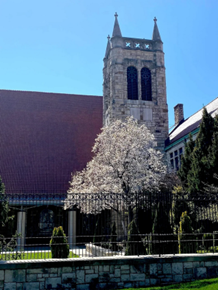
Grace & Holy Trinity Cathedral
Kansas City, Missouri
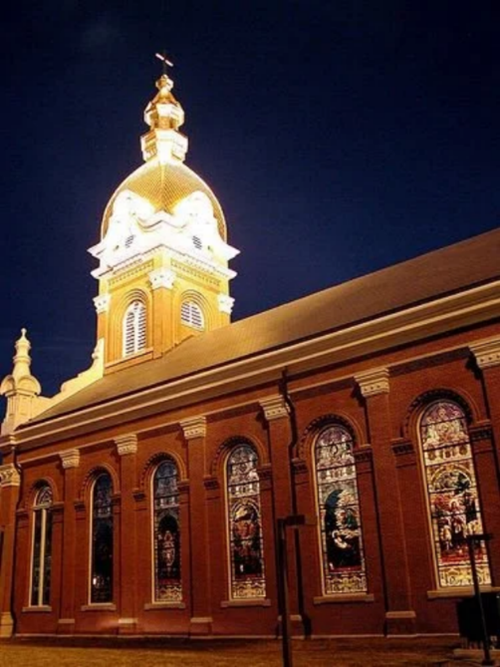
Cathedral of the Immaculate Conception
Kansas City, Missouri
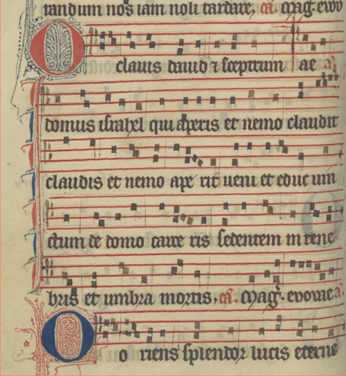
After organist John Schaefer opens the concert with an attention-grabbing organ work, the choir will intone Veni, Veni Emmanuel (“O Come, O Come Emmanuel”) at the back of the church. This haunting Advent hymn traces its roots to the eighth or ninth centuries, when monasteries would mark the seven days before Christmas eve by chanting a different “O” antiphon each night. For example, “O Emmanuel,” “O Adonai,” “O Key 0f David,” etc. The Festival Singers will sing a modern arrangement of this ancient hymn by the outstanding young composer Ed Frazier Davis.
O Key of David, Maître du Méliacin Antiphonaire dominicain. 1300
Then the choir will process to the front of the church to O Come, All Ye Faithful. Following that is the first selection by composer-in-residence Sean Sweeden, Everywhere I Go.
“A great composer is one whose music is planted in different soils,” Baker said. “There are some composers whose names I won't mention, but you hear their music and, okay, they've written a wonderful piece of music, and then they write it 20 times more in different clothing. Sean's music has an incredible diversity of sound. Everywhere I Go is a setting of a spiritual for men's chorus. It’s rambunctious, and it's out there, and after the procession, it announces the joy of the concert.
Other works by Sweeden on the concert include Adam Lay Ybounden, There is No Rose, In the Beginning and Alleluia.
“Sean is a percussionist, and his music is highly rhythmic,” Baker said. “Several of his pieces will use one or another of his percussion instruments, and that is certainly the case with the Alleluia on the program. I never quite know which percussion goodies he's going to bring, but it's always a delight when he does.”
Ed Frazier Davis
Dr. Sean Sweeden
Two notable works on the program are from the Russian Orthodox tradition, two settings of O Gladsome Light, one from Sergei Rachmaninoff’s Vespers and the other by Alexander Grechaninov. The Rachmaninoff will be sung in Church Slavonic and the Grechaninov in English.
“We did the Rachmaninoff last year on our tour to the Southeast in Atlanta, and the group sang it very nicely,” Baker said. “It has such a rich texture, and the Festival Singers, for a semi-professional ensemble, is a larger ensemble than most, so we're able to do this late Romantic music with depth. I told the choir I think this piece was written for them. We're quite blessed that one of our members is the former accompanist of the Yale Glee Club, and he's one of our staff pianists, as well. But his work now is as an editor for Oxford University Press, and he is quite gifted in languages, so he has been our coach for the Church Slavonic.”
The wide-ranging musical selections will include a work by the contemporary composer René Clausen, Seek the Lord, and a work by the 19th century Austrian composer Anton Bruckner, Virga Jesse, which will be conducted by Christine Freeman, associate director of music for the Festival Singers.
“Christine began with us as a student intern,” Baker said. “Our student intern program has graduated 40 young conductors that are all over the country, leading in university and school and church and professional choral worlds, and Christine is one of them. Virga Jesse is another one of those pieces that’s got Festival Singers written all over it because of its richness. It was on our November concerts, and Christine did such an amazing job with it that I said, you've got to do that on Candlelight Carols and Cathedral.”
Sergei Rachmaninoff
Alexander Grechaninov
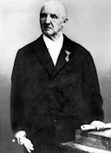
Anton Bruckner
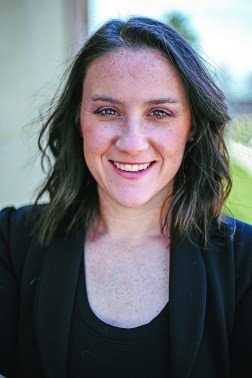
Christine Freeman, MME
When you attend a Festival Singers performance, you can tell that it’s not mere entertainment. There is a fervor that is palpable. Baker doesn’t make a show of it, but in private conversations, he often speaks of his personal faith and how it informs his music. Although the Festival Singers is not a religious choral ensemble, per se, there is no doubt that Baker’s faith brings out something special in his singers.
“I make no secret that the story of Christmas, the story of God's reaching into our lives to bring us hope and salvation, I believe with all of my heart,” Baker said. “Candlelight Carols and Cathedral is an unapologetic celebration of the story of the omnipresent God coming in the guise of a vulnerable infant to bring hope and help to people. There are people who come to these concerts, and their hearts are bursting with joy. They're in a place in their life where things are happening beautifully, and they're looking for a way to give expression to the joy that's in their heart. And there are people that come to these concerts with hearts that are broken, and they come to seek music and words and traditions that will bind up their broken hearts. I believe that the voice that speaks through us is much greater than our own.”
The William Baker Festival Singers at Grace and Holy Trinity Cathedral
2:00 p.m. December 14 at Grace and Holy Trinity Cathedral, 415 E. 13th St.
7:30 p.m. December 19 at the Cathedral of the Immaculate Conception, 416 W. 12th St.
$23.18 to $28.52. To purchase, www.festivalsingers.org/concerts
By Patrick Neas, KC Arts Beat | October 31, 2025
Liber Divinorum Operum, or the Universal Man Illumination by St. Hildegard of Bingen
Oh, how miraculous is the foreknowing of the Holy Heart, which anticipated creation.
For when God looked upon the face of the human he created, he saw fulfilled all of his works.
O quam mirabilis, St. Hildegard of Bingen’s hymn of cosmic harmony, will open Vision of Peace, a concert by the William Baker Festival Singers at 3 p.m. Nov. 2 at St. Mary’s Episcopal Church. Other composers featured on the program include Jean Berger, Samuel Barber, Anton Bruckner, Felix Mendelssohn and the Festival Singers’ composer-in-residence, Sean Sweeden.
The concert centers around the theme of peace. But Baker at first was hesitant to address this well-worn subject.
“I try to come up with a theme for our season every year, and what kept resonating in my mind was peace,” Baker said. “It had nothing to do with anything going on in the world, except it just floated in my head. And I’m going to tell you, I rejected it. I said, OK, I’m not going to do peace. Everybody does peace. Who in this world is not interested in peace? I did not want to be put in that niche or that pigeonhole, but it kept coming back to me and coming back to me and coming back to me.”
Baker says that when he heard Vox Venti, a Chicago choir which is part of Baker’s Choral Foundation, perform Hildegard’s O Quam Mirabilis that a concept of peace beyond the usual clichés opened up for him.
“That got me thinking,” Baker said. “Peace is something that was intended for us by our very creation. Peace was created in us and we have rejected it, but we have an opportunity to come back. We can find peace in our daily lives, in the sleeping of a child, the beauty of the ocean. When I’m sitting out on the back porch with a glass of wine, looking through the trees in my backyard at the blue Kansas sky, my spirit is serene. So all of this started kicking around, and in 30 minutes, I had the program.”
The concert will open with the women of the Festival Singers performing O Quam Mirabilis (“O How Miraculous”) by the 10th-century abbess and visionary St. Hildegard of Bingen, and that will be followed by Vision of Peace by Jean Berger.
“Berger was Jewish and was born in 1909 in Westphalia,” Baker said. “When the Nazis began persecuting Jews, he first went to Paris and then he escaped the Nazis again in Paris and fled to Rio de Janeiro, where he did a number of pieces in Portuguese. One of his great pieces is called Brazilian Psalm. The Alleluia from it is a choral staple. Finally, he found his way to the United States during World War II. He joined the American army during the war, and then he became an American citizen before the end of the war. He was always an anti-war person, and his Vision of Peace is considered one of his great anti-war statements.”
Jean Berger
Dr. William O. Baker
The choir will then perform three 19th-century hymns Baker is particularly fond of: Come, Ye Disconsolate, which will be sung by the men of the Festival Singers, Pensive Dove, and Morning Trumpet. Pensive Dove is an Early American Sacred Harp hymn, popular in New England and among Southern revivalists. Baker, a native of Atlanta, has a special feeling for the Sacred Harp repertoire.
“I have never done Pensive Dove before,” Baker said. “There were people in the Festival Singers who said, ‘We can’t believe there’s a Sacred Harp hymn you haven’t done before.’ But I haven’t. It’s very Victorian in its language, the image of the dove seeking peace where pleasure holds her reign. “But then I saw it in vain. I sought the peaceful dove in the rosy bower. I knew her tender heart. I sought her in the bower of love. But she had flown that peaceful dove, felt the traitor’s dart. And then in sweet religion’s humble cot, she built her downy nest to seek that sweet secluded spot and win peace to my breast.”
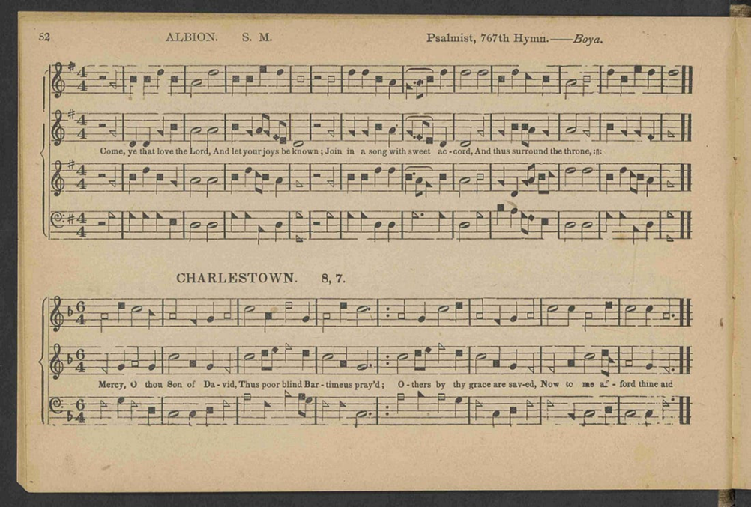
Page 52 from The Sacred Harp, fourth edition (1870), showing the four-shape notation and the traditional oblong layout
Baker will then hand the baton to Christine Freeman, the Festival Singers’ associate music director, who will conduct works by two great 19th-century composers, Anton Bruckner and Felix Mendelssohn. The first is Bruckner’s Virga Jesse (“The branch of Jesse has blossomed”), a hymn often associated with Advent.
Bruckner was aligned with the Cecelia Movement, which sought to revive Gregorian chant and Renaissance polyphony in Catholic music. Virga Jesse exemplifies this ideal while embracing Romantic color. The motet builds to a powerful climax on the phrase pacem Deus reddidit (“God has restored peace”), followed by a serene and luminous Alleluia.
Felix Mendelssohn’s Verleih uns Frieden gnädiglich (“Grant Us Peace Graciously”), composed in 1831, is a short but deeply expressive chorale cantata for choir and orchestra, setting Martin Luther’s German paraphrase of the Latin prayer Da pacem Domine.
The hymn was written in 1831 when Europe was torn by war and conflict, and may have been a spiritual response to the tensions of the time. It reflects Mendelssohn’s reverence for Johann Sebastian Bach, combining Baroque clarity with Romantic warmth. It’s structured as a single movement, with a calm, prayerful tone throughout.
Anton Bruckner
Christine Freeman, MME
Felix Mendelssohn
One of the admirable things about Baker and his ensemble is their commitment to commissioning new music. They’ll perform two works by the 39-year-old composer Daniel Elder: Ballade to the Moon and Lullaby.
“Elder is a native of Atlanta,” Baker said.” He did his undergraduate at my alma mater, the University of Georgia and did his master’s at the Westminster Choir College. His music is so well-regarded that the great Westminster Choir did an entire album of his pieces. I think the only other composer that got an entire album of pieces before Elder by the Westminster Choir was Bach. So that puts him in high company.”
The Festival Singers' commitment to new music is so strong that since the late 1980s, they have had a composer-in-residence. They will perform music by their current and fourth composer-in-residence, Sean Sweeden.
“Dr. Sweden is a wonderful countertenor and a brilliant percussionist,” Baker said. “He’s written some wonderful music for us since his appointment in February. One of the two pieces that we’ll sing on Sunday is an arrangement that he did of Over the Rainbow. It’s just absolutely, heartbreakingly beautiful. Somewhere over the rainbow, there’s a land I heard of in a lullaby. The dreams that you dare to dream really do come true.”
Daniel Elder
Dr. Sean Sweenden
The program also includes works by three modern composers: Agnus Dei, Samuel Barber’s choral setting of his gorgeous and extremely popular Adagio for Strings, Ubi Caritas by René Clausen, and The Lord is the Everlasting God by Kenneth Jennings.
“I have about five or six settings of the Ubi Caritas, and my favorite of the five is whichever one I’m doing at the time,” Baker said. “But I think René Clausen’s setting, which has a little bit more of the text, has got to be one of the most beautiful and one of the most compelling. Where charity and love are, God is there. Let us keep our minds free of division. May there be an end to malice and strife and quarrels.
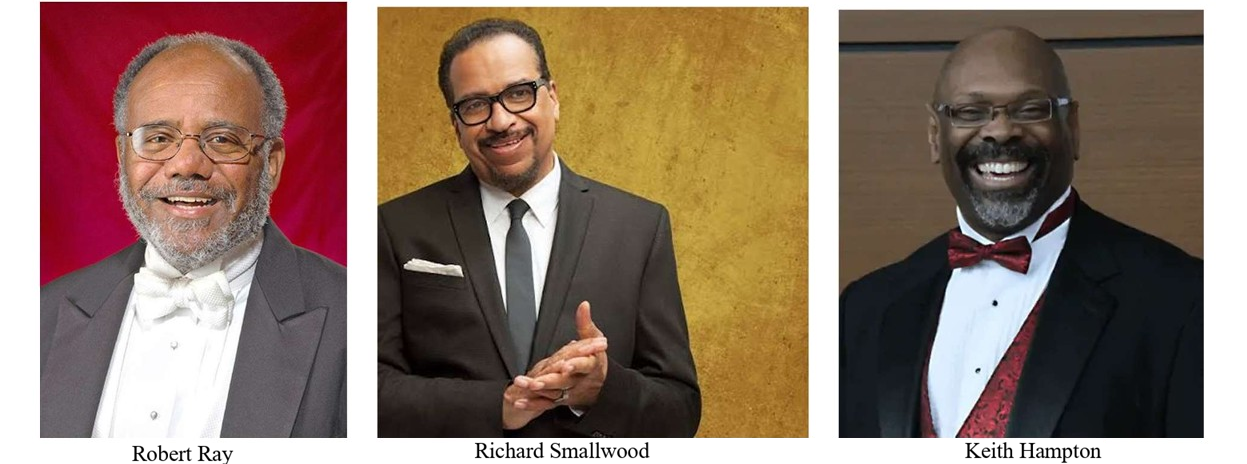
The concert will end with gospel spirituals, a Festival Singers specialty: Alice Parker’s settings of Sometimes I Feel Like a Motherless Child and Deep River and Robert Ray’s He Never Failed Me Yet.
“What can be more about peace than Deep River, the promised land where all is peace,” Baker said.
“The Festival Singers have had two appearances so far this season, and the group is off to a great start. They have been quick in rehearsals. They have, just out of the gate, a level of nuance and familiarity with the music. They’ve always been a strong group, but this year they are really out of the gate, running fast. I am totally stoked about this concert.”
Vision of Peace
Presented by the William Baker Festival Singers
3 p.m. Nov. 2 at St. Mary’s Episcopal Church, 1307 Holmes. $23.18 to $28.52 Tickets Available at the door or at www.festivalsingers.org
The William Baker Festival Singers at St. Mary’s Episcopal Church
By Hannah Edgar | Chicago Tribune PUBLISHED: February 10, 2025 at 5:30 AM CST
Ed Frazier Davis is the son of the late Sir Andrew Davis, the longtime music director of Lyric Opera. Ed is participating in two memorial concerts for his father. (E. Jason Wambsgans/Chicago Tribune)
Ed Frazier Davis realized he wasn’t like other kids pretty early on. How many kids lived in a high-rise on the Mag Mile? Had the Lyric Opera House as their personal playground? Performed onstage for thousands of people by the time they were in middle school?
For Davis, all that and more was possible because his father was the smiling, bright-eyed man on the Lyric Opera podium: Sir Andrew Davis, the house’s music director from 2000 to 2021. His mother, Gianna Rolandi, was an operatic soprano and director of Lyric’s Ryan Opera Center for early-career singers.
It wasn’t long before little Ed became a chip off the old block. Early on in Sir Andrew’s tenure, Ed was cast as a cabin boy in a 2001 Lyric production of “Billy Budd.”
“My dad loved to tell the story about how, at one point in the dress rehearsal, one of the singers got off by a few beats. But I came in at the right time. Afterward, my dad said something to the effect of, ‘That was great. You got back on track.’ And I said, ‘Well, Dad, I listened to the orchestra!’” Davis recalls. “He was just so pleased by that. ‘Chuffed,’ as he would say.”
Davis’s next Lyric bow will be on Feb. 15, his father’s memorial concert. The elder Davis died last April after battling leukemia. The concert — free with a suggested donation to Lyric, per his wishes — includes a piece by Ed, now a composer and conductor himself, and singers from across Sir Andrew’s decades-long international career.
Among those singers is soprano Christine Goerke, who last sang at Lyric as Brünnhilde in its pandemic-foiled “Ring” cycle. She estimates she’d worked with Sir Andrew on at least a half-dozen productions.
“You always felt safe in his hands. Wagner can be so bombastic — you can get lost and drowned out,” Goerke says. “I never felt that way with him … I felt like I could fly.”
Mezzo-soprano Elizabeth DeShong — who started her career in Lyric’s Ryan Opera Center and has since sung 14 roles with the company — agreed.
“It was the greatest feeling to sing for Andrew and see this smile spread across his face,” she reminisces. “The twinkle in his eye, the knowing grin, the unspoken understanding that you were creating something beautiful for the world. It was pure and without ego.”
A few weeks later, Ed Davis follows the concert with his own tribute on March 8, featuring his choir Vox Venti. To mark the occasion, the choir commissioned a new work by Roxana Panufnik, who became close to Sir Andrew while preparing her “Songs of Darkness, Dreams of Light” for the last night of the 2018 BBC Proms. The piece, “Heroic Hearts,” sets “Ulysses” by Alfred, Lord Tennyson, one of Sir Andrew’s favorite poets.
“We have a very unique connection, because she also had a famous conductor dad,” Davis says of Panufnik.
Sir Andrew Davis, center, takes a curtain call with Renee Fleming as Hanna Glawari and Thomas Hampson as Count Danilo Danilovich after a full dress rehearsal of “The Merry Widow” at the Civic Opera House, Nov. 11, 2015, in Chicago. (John J. Kim/Chicago Tribune).
Indeed, even the general sketches of Davis’s biography carry his parents’ stamp. He was born in Spartanburg, his mother’s hometown, “sort of strategically” so he could have dual American and British citizenship. He grew up in the UK, in rural Rodmell — an easy commute for Sir Andrew to the Glyndebourne opera festival. An elderly neighbor had been one of the unfortunate youth to drag Virginia Woolf’s lifeless body from the River Ouse. Other than that, Rodmell was quiet, uneventful. Just as Sir Andrew liked it.
“My dad was a very down-to-earth guy. He and my mom both came from very poor backgrounds. They raised me to never take our financial situation for granted,” Davis says.
Ed Davis now considers himself an American, having spent twice as long in the States as Great Britain — though, at Knox College in Galesburg, he would revert back to a British accent whenever he “reached a certain level of intoxication.” There, he planned to carve a path independent of his parents.
“My initial intent was to pursue a creative writing degree. My mindset at the time was, ‘Well, I’ll never be as successful as my parents. So why should I try to pursue music professionally?’” he says.
That changed partway through college. During an American lit course, Davis read an Emily Dickinson poem and, for the first time, heard music. He penned his first choral setting and never lost the composing bug. Sir Andrew conducted Ed’s pieces increasingly in recent years, even including one — “A Seed of Joy,” a partner piece to Beethoven’s Ninth — on his 2022 retirement concert at Lyric.
Music Director Sir Andrew Davis works Sept. 20, 2016 during rehearsal for “Das Rheingold” at the Lyric Opera. (Brian Cassella/Chicago Tribune)
After Rolandi died in 2021, Davis composed “Mother and Child” in tribute to her — a piece which will be reprised at Lyric’s memorial concert. His “Set Me as a Seal” will be included on the Vox Venti program, alongside British choral music which was close to his father’s heart.
Unlike his son, Sir Andrew resisted calling himself a composer. Nonetheless, in recent years, he started arranging Bach organ pieces — organ was the first instrument he played professionally — and Handel’s “Messiah.” The last concert he conducted, with the Chicago Symphony, featured his own boisterous, exuberant reorchestration of the oratorio.
After his wife’s death, Sir Andrew traded the hustle and bustle of downtown Chicago for a house in Old Irving Park, close to Ed. It wasn’t quite the English countryside, but they were able to get dinner together at least weekly in the last year of his life.
“He was thrilled to find a new home that was not surrounded by tall buildings,” Ed Davis says.
At Lyric’s memorial concert, Goerke will sing “Es gibt ein Reich,” from Richard Strauss’s “Ariadne auf Naxos.” “It’s completely apropos. She’s talking about yearning for death, because everything is awful here,” she says. “It’s funny, cheeky and beautiful at the same time, and I don’t think I could think of any more adjectives that better describe Sir Andrew.”
A young Ed Davis with father Andrew Davis and mother Gianna Rolandi in 1996 at the family’s home in Rodmell, East Sussex, England. (Provided by Ed Davis)
For all the hustle and bustle of Sir Andrew’s life, Davis is struck, in his death, by how attentive of a family man he was. “He always made time for my mom and me,” he says.
One memory sticks out. Davis has grappled with severe depression his entire life. He first harbored suicidal thoughts at just 15. One night, during a particularly brutal episode, he was crying in bed. Sir Andrew heard him from the hall.
“He just laid with me until I felt better,” he says. “It’s just the kind of guy he was.”
Ed spoke to the Tribune the day before what would have been his father’s 81st birthday, on Feb. 2. To celebrate, he planned to go to evensong at a church in Evanston — like any good Brit, Sir Andrew loved Anglican choral music — and “have a Negroni, his favorite.”
“I think maybe my dad’s biggest mission in life was to make everybody, from the Yo-Yo Mas of of the world to the last-row violinists and stagehands, be excited to make music for a living,” he says. “It’s a unique place to be in, being the child of someone who is not only famous but also unusually and universally adored.”
Hannah Edgar is a freelance critic.
The Rubin Institute for Music Criticism helps fund our classical music coverage. The Chicago Tribune maintains editorial control over assignments and content.
“A Concert Celebrating the Life of Sir Andrew Davis,” 7:30 p.m. Feb. 15 at Lyric Opera of Chicago, 20 N. Wacker Drive; tickets free with suggested donation, lyricopera.org
“In Memoriam Sir Andrew Davis,” 7:30 p.m. March 8 at St. Luke’s Episcopal Church, 939 Hinman Ave., Evanston; general admission tickets $25, reserved seating $75, voxventi.org
Classical KC | By Libby Hanssen, Sam Wisman, Genevieve Des Marteau Published September 4, 2024 at 1:55 PM CDT
This story was first published in Classical KC's "Take Note" newsletter.
Kansas City has a rich Hispanic and Latin American culture, dating back to the 1800s. Through the centuries, immigrants brought their traditions to the region and subsequent generations fostered that heritage. (Learn about Topeka, Kansas’ Mariachi Estrella with KCUR’s A People’s History of Kansas City.)
Many classical music composers have found inspiration and influence from popular and folkloric traditions and contemporary musicians combine those practices as well.
“Folkloric traditions and classical music share deep connections rooted in cultural expression, historical development, and musical structure,” said guitarist Beau Bledsoe, founder of Ensemble Ibérica. “Folkloric music often reflects the cultural identity and stories of a community, serving as a foundation for many classical compositions.”
Classical KC frequently highlights music of Mexico, Central and South Americas, as well as Hispanic and Latino American artists, like Colombian violist Victor Díaz and violinist José Ramírez and conductor Carlos Miguel Prieto, who led the Mineria Symphony Orchestra of Mexico City in their first ever United States tour, and community members like Leo Prieto, advisor to the Consulate of Mexico in Kansas City.
As you celebrate National Hispanic Heritage Month, we invite you to stream Classical KC weekly to hear “Concierto” at 2:00 on Sunday afternoons, with host Frank Domínguez, America’s first nationally distributed bilingual (Spanish-English) classical music program.
Learn about some of the artists and organizations celebrating Hispanic and Latin American music this month and throughout the year.
Voces Festivas, a Spanish-language choir, kicks off rehearsals for its 4th season in the Kansas City community on Sept. 4. This no-audition ensemble is part of The Choral Foundaion’s cast of choirs and open collaborates with other groups, like the Summer Singers of Lee’s Summit, which performed Ariel Rameríz’ “Misa Criolla” this past summer. The group is conducted by Leilani Velasco Vaughn, who is Mexican-American and grew up hearing her family’s choir, Coro Santa Cecilia.
“[Voces Festivas’] mission is to share Spanish choral music with anyone both in learning and in performing,” she told Classical KC. “The doors are always open for anyone who would like to join.” They will perform at the Johnson County Hispanic Heritage Month Celebration on Wednesday, October 2 at the Johnson County Arts and Heritage Center.
Soprano Victoria Botero has performed with the group as a soloist, as well as Ensemble Ibérica, the Kansas City Symphony, William Baker Festival Singers, Kansas City Wind Symphony and others, along with performing and producing her own concepts for The Cecilia Series, such as her well-received project “Gabo: A Love Letter,” inspired by famed Spanish-language novelist Gabriel García Márquez. Her parents, born and raised in Colombia, immigrated to the United States as young adults, so Botero’s childhood was infused with a mix of Latin American popular music and the likes of Frank Sinatra and Barbra Streisand. During her undergraduate program, Botero stumbled on the music of Colombian composer Jaime León, whom she researched and then interviewed for her master’s thesis at UMKC Conservatory.
“I learned so much about my own heritage through his music, his use of South American poets, and harmonic language. He had such a beautiful point of view with songs that evoked Colombian folk tunes with really sophisticated harmonies that ached with emoon and remind me of Strauss,” she said. Hear Botero discuss her heritage, inspirations, and selection of songs with Classical KC International ties.
Perhaps the local organization with the widest global vision is Ensemble Ibérica, a cohort of international musicians. The group was founded by Kansas City-based guitarist Beau Bledsoe, who not only taps local talent but collaborates with a range of national and international musicians, celebrating the traditions and styles of Spain, Mexico, Portugal, Brazil, Argentina, and other Latin American countries. While studying classical music at UMKC Conservatory, Bledsoe formed friendships with Hispanic musicians, traveled to Mexico, and studied traditional Mexican music. With his friend Hector Aquirre, he performed in restaurants along Southwest Boulevard in the traditionally Hispanic Westside neighborhood. “While I was pursuing my master’s degree in classical guitar performance at the Conservatory, Southwest Boulevard became a second college to me,” he said. Collaboration is the keystone of Ensemble Ibérica’s presentations, and Bledsoe invites artists from all over the world to share their insights, histories, and musicality with local audiences. Frequent local collaborators include Bolivian multi-instrumentalist Amado Espinoza, Mexican vocalist Fedra Cooper, Barrera, and Brazilian vocalist Bruno Bessa.
In 2023, the ensemble presented Music of the Americas at New York City’s Carnegie Hall, invited by presenter Nilko Andreas, a Colombian guitarist based in New York. Andreas comes back to Kansas City this month for “Sur,” a program of South American music and will be joined by another friend of the group, Bolivian vocalist Gian-Carla Tisera. Ensemble Ibérica will also perform for a showing of “Epoca de Oro (The Golden Age of Mexican Cinema) at the Nelson-Atkins Museum of Art on Sept. 28, then travels to Turkey in October and Bolivia in November before returning home for the program Sin Fronterias (Without Borders), a collaboration with Grammy Award-winners Mireya Ramos and Los Texmaniacs, and Slim Hanson and the Poor Choices at Musical Theatre Heritage on Dec. 28.
Additional events Fiesta Hispana, various performers, American Royal facilities, Sept. 13-15, 2024. Malevo, an all-male group specializing in Malambo, a traditional Argenne folk dance. Midwest Trust Center, Sept. 26, 2024.
Sonia de los Santos, singer and guitarist with “A Celebraon of Lan America,” Midwest Trust Center, Oct. 25 and Oct. 26, 2025.
Mariachi Herencia de Mexíco, a Chicago-based, Grammy Award-nominated mariachi ensemble, MidwestTrust Center, Oct. 26, 2024.
Disney’s Encanto Sing-Along Live Concert, watch the film with live music, presented by the Harriman-Jewell Series, Folly Theater, Nov. 1, 2024.
Ballet Folklórico de México de Amalia Hernádez, presented by the Harriman-Jewell Series, Kauffman Center for the Performing Arts, Feb. 23, 2025.
Cruzar la Cara de la Luna, the first mariachi opera ever writien, presented by Lyric Opera of Kansas City,Kauffman Center for the Performing Arts, March 7-9, 2025.
Kansas City Jewish Chronicle Category: Community News Published: 05 September 2024
The Summer Singers of Kansas City performing Ernest Bloch’s “Avodath HaKodesh” on Aug. 25 at the Kauffman Center.
The Summer Singers of Kansas City, 165-voices strong, joined with organist Dr. Jacob Hofeling, baritone Dr. Joshua Markley (in the role of the cantor) and percussionist Mark Lowry to perform the “Avodath HaKodesh” (Sacred Service) of Swiss/American Jewish composer Ernest Bloch.
The concert was led by Music Director and Conductor Dr. William O. Baker before an audience of nearly 500 people in Helzberg Hall of the Kauffman Center for the Performing Arts. The performance, held on Sunday, Aug. 25, also included Max Bruch's “Kol Nidrei” for cello and organ, performed by Dr. Hofeling and young cellist James Farquhar.
Composer Ernest Bloch was commissioned by a Reform congregation in the San Francisco area to compose a choral-orchestral setting of the temple service from the Union Prayer Book in the early 1930s. The commission was generous, and the composer took two years to compose one section of the work alone. He spoke often of how he had considered himself "Swiss by birth, American by adoption and Jewish by heritage." Before his work on “Avodath HaKodesh,” Bloch considered himself a largely secular person, but his Jewish faith grew during his work on the piece.
The Summer Singers of Kansas City is an ensemble of the Roeland Park-based William Baker Choral Foundation, an organization with a long history of supporting music of the Jewish tradition. The semi-professional William Baker Festival Singers, an ensemble of the Choral Foundation, commissioned, performed and recorded William W. Dreyfoos' “Songs of the Holocaust” in Atlanta, Kansas City and Charleston's Piccolo Spoleto Festival. It was broadcast on the eve of Passover on National Public Radio's "Performance Today" in 2012.
In 2014, the Choral Foundation created a year-round Jewish chorus, Zimria Festivale Atlanta. In 2023, in Lee's Summit, Missouri, and 2024, in Marietta, Georgia, the Choral Foundation mounted two performances of Donald McCullough's “Holocaust Cantata.” The Lee’s Summit event was in partnership with the Midwest Center for Holocaust Education and the Hyman Brand Hebrew Academy.
The Summer Singers of Kansas City expressed appreciation to the Jewish Community Foundation of Greater Kansas City through the Louis and Frances Swinken Supporting Foundation; the Kenneth Babcock Memorial Masterworks Fund; the Martha Lee Cain Tranby Music Performance Fund; and the Kansas Arts Commission for their generous support of the project.
Additional information about the work of the Choral Foundation is available at ChoralFoundation.org, by emailing Mail@FestivalSingers.org or calling (913) 488-7524.
by Paul Pattison special to KC Arts Beat
I tend to get pretty excited when a composition I’ve never heard in a live performance is suddenly on offer. I get even more exited when a composition I’ve never heard of is presented. Especially if it’s by a composer who has fallen into relative obscurity. This was certainly the case when I learned that The Summer Singers of Kansas City, led by founder William Baker, would be performing “Avodath Hakodesh” (Sacred Service) by Ernest Bloch (1880-1959).
Formed in 1999, the Summer Singers of Kansas City is a non-auditioned chorus of 100 to 170 voices. Some are professional musicians but anyone who has a love for choral music is invited to join. The addition of non-professional singers in no way diminishes the quality of the chorus. Baker has proven, through the formational of many choral groups, that he is a master in attaining excellent quality.
The concert took place in Helzberg Hall on August 25th. Seating was limited to the center section of the hall and from my vantage point, nearly every seat was occupied. In lieu of a full orchestra, this performance was accompanied using the versatile Casavant organ, played by Jacob Hofeling, with Mark Lowry on percussion. The solo cantor part was sung by baritone Joshua Markley.
The concert started with a performance of “Kol Nidrei” by Max Bruch (1838-1920). Translated as “all vows,” it served as a prelude to the service. The cellist, James Farquhar, was seated in the organ loft, with Hofeling accompanying. Farquhar exhibited an excellent, full-bodied, soulful tone and was passionate in his presentation. The balance between organist and cellist was perfectly maintained. Both musicians nicely realized the variations of the two main themes, as though they were having an intimate conversation. The haunting conclusion was handled with great tenderness as the music slowly faded away.
All stops were pulled out for Avodath Hakodesh, literally. Hofeling employed every device on the Casavant organ to great effect. The large choir filled the hall with a rapturous sound that was always under control, whether in tumultuous outbursts or so quiet as to be nearly a whisper. Each section of the chorus could be distinctly heard while also blending in. An “a cappella” section that featured shifting harmonies was deeply moving. Lowry added dramatic effect on timpani and cymbal.
Markley displayed a rich, mellifluous timbre while effectively projecting clear diction. A friend who attended the concert with me and is intimately familiar with the service at synagogue, remarked that he could clearly understand every word. Special kudos to Hofeling on organ. He maintained an intimate sense of maintaining the necessary balance whether with the baritone or chorus. His selections of stops was especially thrilling. The sheer amount of practice necessary to learn the orchestral reduction is astonishing.
Baker is to be commended for bringing rarely heard masterpieces to the concert stage. In the past, he has presented Handel’s “Judas Maccabeus” and Haydn’s “Creation.” I eagerly await his next venture.
Libby Hanssen | August 27, 2024
The Summer Singers of Kansas City is a non-audition chorus that practices once a week in the summer and performs once a year. But if you didn’t know the ensemble was primarily passionate amateurs, you might not even realize it. They brought power and excitement to their performance in Helzberg Hall on Sunday evening.
Each year, conductor and founder William Baker selects one of the choral repertoire’s significant masterworks to perform with the Summer Singers, with included over 150 singers. The group celebrated its 25th anniversary this year—that’s a whole lot of masterworks tucked into their collective belts.
This time around, Baker chose Ernest Bloch’s “Avodath Hakodesh” (Sacred Service), a piece that doesn’t get performed nearly as often as work by Johannes Brahms, Ludwig van Beethoven, or Wolfgang Amadeus Mozart, but—like many of their famous choral works—is based on the structure of religious service, in this case from the Jewish liturgy, rather than Catholic or Lutheran.
As far as I could ascertain, this is the first local performance of the piece since 2012, when Baker programmed the piece with his Festival Singers. Prior to that it hadn’t been performed in Kansas City in nearly 30 years (and only about two performances in the 30 years preceding that concert), making Sunday’s performance particularly intriguing.
Completed in 1933, this oratorio presents the prayers and chants of Reform (as opposed to Orthodox or Conservative) Sabbath morning service and is primarily in Hebrew, introducing English in the final section (in the program, other then the opening phrase for each section, only the English translations and text was shared). It was written for mixed chorus, cantor (baritone soloist) and orchestra. In this performance, they presented Bloch’s arrangement with organ instead of orchestra (performed by Jacob Hofeling on the hall’s Casavant organ), supplemented by timpani and cymbal (performed by Mark Lowry). Including percussion was an effective decision, emphasizing dramatic moments both aurally and visually, with Lowry positioned near the front line of vocalists and adding rumble to the organ’s pedal notes.
Soloist Joshua Markley was the cantor, performing from the organ loft. He had a rich and somber tone, well suited to the range of the music and declamatory leadership role. There were a few brief solo moments for members of the choir, too, some cutting through the texture better than others, especially when the organ had a prominent part.
The piece is written in five parts, in keeping with the service structure. As a 20th century composer, Bruch brought a modernist sensibility to the work and included a wide range of melody, texture and expression in the piece. The group navigated these varying influences with skill, from soft, introspective moments to riotous joy, straight ahead choral singing to otherworldly chords, in a performance to be commended.
The concert actually started with Max Bruch’s “Kol Nidrei, op. 47” (“Adagio on Two Hebrew Melodies”), performed by James Farquhar on cello and Hofeling on organ. While Bruch was not Jewish, he associated closely with Jewish musicians and used Jewish folk music in some of his work. This piece pre-dated Bloch’s work by about 50 years, but the original text for Kol Nidrei is taken from ancient Aramaic and associated with Yom Kippur, the holiest day of the year in the Jewish calendar, the day of atonement, part of Jewish tradition for centuries.
Farquhar performed in the organ loft next to Hofeling, high above the stage. It was a solemn piece, carrying on its steady tones centuries of meaning and experiences. The second section, based on 18th century music by Isaac Nathan, was busier, grander, traveling throughout the range of the cello. The end, a rising line in cello, supported by soft chords on the organ, lingered in the air with the final release.
This ensemble is one of many under the umbrella of The Choral Foundation, including the Summer Singers of Lee’s Summit, which performed Ariel Ramirez’s “Misa Criolla” for their 10th anniversary concert this past July.
For more information on the Summer Singers of Kansas City visit www.festivalsingers.org.
Libby Hanssen
Originally from Indiana, Libby Hanssen covers the performing arts in Kansas City. She is the author of States of Swing: The History of the Kansas City Jazz Orchestra, 2003-2023. Along with degrees in trombone performance, Libby was a Fellow for the NEA Arts Journalism Institute at Columbia University. She maintains the culture bog "Proust Eats a Sandwich."
BY PATRICK NEAS SPECIAL TO THE STAR JULY 26, 2024 5:30 AM
Jamea Sale with some of the Kenyan students who have benefited from her work bringing music to their schools. Gregory Wegst
It takes more than a village to teach a child music in the remote corners of Kenya.
In the impoverished countryside where bare necessities are often lacking, it also takes the help of trained musicians like Jamea Sale and the donations of good-hearted folks in Kansas City. Through Sale’s training of local Kenyan teachers and the instruments donors are providing, lives are being profoundly changed.
In 2000, the Kenyan government decided their schools should focus on math, science and history, and for all practical purposes, music was dropped as a course of study. Realizing the deleterious effect the lack of music has had on the nation’s academics as a whole, it has decided to restart its music curriculum. But Kenya now finds itself with a severe shortage of music teachers and instruments.
Sale grew up in an environment that was much more encouraging of music. She hails from Colby, Kansas, which is also the hometown of operatic bass Samuel Ramey and organist Jan Kraybill.
“It was a town pretty invested in music, Sale said. At school, “we had lots of opportunities to sing and do acting. I could take piano lessons because there was a piano instructor on staff. You could take voice lessons and instrumental lessons all the way through school. My family had a lot of love for music, so that was really encouraging to me, as well.”
Sale studied music education at Kansas State University, but after graduation, she pursued a non-musical career for 20 years. She would eventually join the William Baker Festival Singers and get a master’s degree in voice science at the University of Kansas.
“I became convinced that I wanted to do my Ph.D., as well,” she said.
After singing with the Festival Singers for several years, Sale was appointed executive associate director of the William Baker Choral Foundation, and then the director of the foundation’s Institute for Healthy Singing and Voice Research.
“Our full mission at the Institute for Healthy Singing is to promote vocal health for all singers of all ages and levels of achievement for life,” Sale said. “Whether you’re a child or an aging adult, we want you to have the ability to sing throughout your lifetime with healthy practices and to learn how to do singing efficiently.”
In 2021, Gregory Wegst, who is on the advisory board of the institute, visited Kenya, and heard that the Kenyan government was adding music to the curriculum for the first time in almost 25 years. When Wegst returned to the United States, he informed the choral foundation about the situation and the urgent need they had for music teachers and instruments.
“Greg has connections in the Kenyan countryside, the Nandi Hills, which is tea country,” Sale said. “There was a cottage and a place we could stay. He asked if we’d be interested in sending a team to teach them music.”
Jamea Sale, Niccole Williams, and Gregory Wegst in Kenya, overlooking the Nandi Hills with Kenyan friends. GREGORY WEGST
When Sale arrived in Kenya, she encountered desperate poverty alongside glorious natural landscapes.
“Overlooking tea fields, the vista is so breathtaking,” Sale said. “But some of the homes are very rudimentary. Many of the homes in the country do not have plumbing, they do not have electricity. A home consists of a little hut and maybe a pantry that consists of just some dishes sitting on the floor, often dirt floors. They cook on wood outside.”
Sale recalled one encounter that perfectly captured the dichotomy between human suffering and uplifting natural beauty.
“The village elder was introducing us to people, and he stopped at this one hut, and a woman came out,” Sale said. “We find out her 10-year-old granddaughter is living with her, and she has cerebral palsy, which is a profound thing to deal with in a hut with no running water. He brought the little girl out and laid her on a blanket. Her legs are stiff, her arms are still. She has no mobility whatsoever, but as I was talking with her, I turned to look at the vista that she was looking at, and people would give a million dollars to have that view.”
Sale says that the villagers at first were wary, but soon welcomed the Westerners with open arms and hands.
“They want to hold your hand,” she said. “In the Kenyan culture, that means I have seen you. We have met and we have a relationship. They’re very generous people. I walked up into the hills with a social worker, and we saw a lot of people who were in pretty desperate situations, but when we arrived back at our cottage, people had dropped off eggs and corn on the cob and bananas as gifts for us, just because we walked up to say hello.”
The Kenyans are also grateful for music. Sale and her team, which includes Niccole Wiliams, education director for the Institute for Healthy Singing, have been making great strides training teachers and teaching students. They’ve also been bringing lots of instruments donated by Kansas City area individuals and organizations.
“We’ve sent hundreds over, from people who have heard about what we’re doing or maybe who sing in our choruses,” Sale said. “One school had a bunch of ukuleles they weren’t going to use anymore, and they just gave them to us. It’s not just instruments, it’s also teaching materials, like piano books from a piano educator who was going to retire. That kind of stuff really was amazing to me and very helpful. We also have brought a lot of instruments ourselves in suitcases when we travel there.”
A Kenyan girl named Vern was thrilled to be given a trumpet. “She laughed with joy, she was so excited,” said Jamea Sale. GREGORY WEGST
Sale says she’s planning many more trips to Kenya and wants to bring lots of instruments with her. One of the recipients is especially meaningful to Sale. A young girl named Vern had been playing trumpet in a band in Nairobi, but then she started to attend a different school that didn’t have any instruments.
“She was like, well, I guess that’s that for the trumpet,” Sale said. “But she heard about us coming, and she asked the principal if it’d be possible for her to get a trumpet. Well, lo and behold, I think practically the day before I left Kansas City, somebody had given us a trumpet, and I threw it into a suitcase. We called in Vern, and she laughed with joy, she was so excited.”
A couple of days later, the entire student body put on a talent show. Vern played her trumpet.
“She played ‘Ode to Joy,’” Sale said. “She also gave a little talk and concluded it by saying, ‘Music will take you places.’ It was just a chilling moment for all of us because she got it. She was saying what we felt for these students.”
For more information, see healthysinging.org.
Summer Singers of :Lee’s Summit, 2024
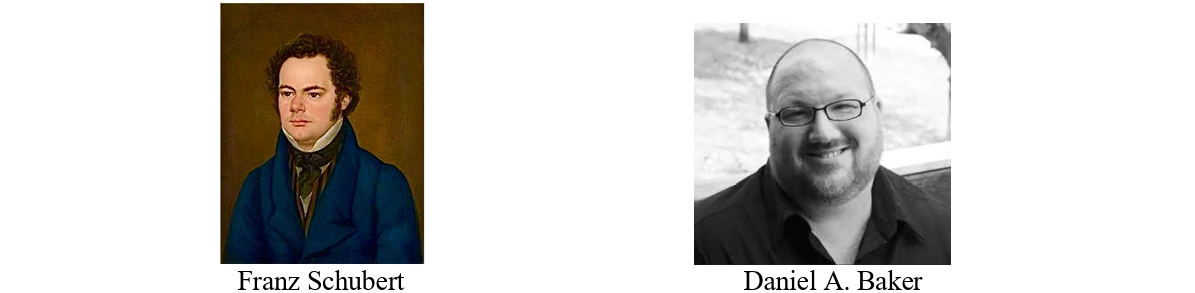
July 20, 2024 The 50-voice Summer Singers of Lee’s Summit performs their tenth annual concert weekend under the baton of Music Director Jennifer Lahasky. The non-auditioned summer-only choir will perform a concert of music from the Hispanic tradition, highlighted by the “Misa Criolla” of Argentinian composer Ariel Ramirez, 1921-2010, and also including “Donde Hay” by American composer Paul Page and a set of Venezuelan folk songs. There will be two performances, Sunday, July 28, 4:00 PM, and Monday, July 29, 7:30 PM, at the St. Paul’s Episcopal Church, 416 SE Grand Avenue in Lee’s Summit. A Wine & Cookie Reception will follow each concert. Tickets are available at the door, or online at ChoralFoundation.org/concerts. “Misa Criolla” is a Spanish language setting of the traditional Mass using traditional Argentinian folk music and dance genres including chacarera, carnavalito and estilo pampeano, and employing Andean influences and instruments. Composed in 1964, the work was one of the first settings of the Mass for both concert and liturgical performance not written in Latin, following the approval of non-Latin settings by the Second Vatican Council a year earlier. The Summer Singers of Lee’s Summit will be joined by accompanist Dr. Geoffrey Wilcken on harpsichord, Dr. Sean Sweeden, percussion, tenor soloist Daniel Baker, and Amado Espinoza on charango guitar. “Misa Criolla” has been described as hauntingly beautiful while at once joyful and exuberant. The dramatic tenor solo line has attracted world renown performers and recording artists, including Jose Carreras, Placido Domingo, and Mercedes Sosa.
Amando Espinoza
The Summer Singers of Lee’s Summit was created in 2014 as an ensemble of the William Baker Choral Foundation, based in the Kansas City area. The choir begins rehearsals in early June to prepare a concert of unique music for performances at the end of July. The age range of the choir has stretched from 16 to 90, and singers have commuted from as far as Nevada, Missouri and Topeka, Kansas to be a part of it. Previous performances have included the “Holocaust Cantata” of Donald McCullough, the “Requiem” of Gabriel Faure, “The Creation” of Franz Joseph Haydn, and the “Requiem” and “Coronation Mass” of Mozart, along with many other immortal masterworks.
Jennifer Lahasky became Music Director of the Summer Singers of Kansas City in 2022, having joined the choir as a singer in its inaugural season, and serving as Associate Director from 2018-2021.
The performance is sponsored, in part, by the Friends of St. Paul’s Music and by Lee’s Summit Cultural Arts. For additional information, call 913-488-7524 or email Mail@FestivalSingers.org.
Jennifer Lahasky, Director
KANSAS CITY JEWISH CHRONICLE - 11 APRIL 2024
The William Baker Festival Singers & Chamber Orchestra will perform a concert of five masterworks, including William W. Dreyfoos’ “Songs of the Holocaust” and Leonard Bernstein’s “Chichester Psalms.”
The concert will be held on Sunday, April 14, at 3 p.m. at the St. Mary’s Episcopal Church (1307 Holmes St, Kansas City, MO 64106). Music Director William O. Baker, Associate Music Director Christine Freeman and Choral Intern Kelsey Emmanuel will lead the 50 voice, semi-professional choral.
Tickets and more information are available at festivalsingers.org/concerts or at the door.
“Songs for the Holocaust” by William W. Dreyfoos is a centerpiece of the concert. Dreyfoos, based in Atlanta, Georgia, has been a composer and performer with the William Baker Choral Foundation’s Jewish ensemble, Zimria Festivale Atlanta. His setting of “Songs of The Holocaust,” which will be sung in Yiddish, is based on tunes and writings of youth and young adults who were trapped in ghettos in Poland during the Holocaust years.
The songs are scored for soprano soloist, choir, piano, gypsy violin and cello. Dreyfoos will be in Kansas City for the April 14 performance.
“Chichester Psalms” is one of Leonard Bernstein’s best-known compositions and most famous choral work. It is a setting in Hebrew of psalms including the Psalm 23, Psalm 100, Psalm 108, and Psalms 130 and 133. The work will be performed by the Festival Singers with Organist Geoffrey Wilcken, percussionist Mark Lowry and former Kansas City Symphony principal harpist Deborah Wells Clark.
In addition to Dreyfoos’ and Bernstein’s works, Benjamin Britten’s “Festival Te Deum,” Ralph Vaughan Williams’ “Dona Nobis Pacem” and Ed Frazier Davis’ “At Our Last Awakening” will also be performed.
The William Baker Festival Singers is the flagship ensemble of the Choral Foundation, a national arts organization based in Kansas City that sponsors 12 performing ensembles in four states, in addition to the Institute for Healthy Singing and Voice Research. The ensemble has produced two dozen nationally-released recordings and has been featured in numerous national broadcasts and publications.
The Festival Singers have toured to 14 states and the District of Columbia, including performances in the Washington National Cathedral, Helzberg Hall of the Kauffman Center for the Performing Arts, Trinity Wall Street Church in New York City, Kahal Kadosh Beth Elohim in Charleston and The Temple on Peachtree in Atlanta.
The Choral Foundation has long had a commitment to music of the Jewish tradition, from the founding of a dedicated Jewish choral ensemble, Zimria Festivale Atlanta in 2014, to performances of the Donald McCullough “Holocaust Cantata” in Lee’s Summit in 2023 and in Marietta, Georgia, in 2024; previous performances, broadcasts and recordings of “Songs of the Holocaust;” and a 2012 performance and Kansas Public Radio broadcast of Ernst Bloch’s “Avodath HaKodesh (Sacred Service).”
The Choral Foundation’s 130-voice Summer Singers of Kansas City will perform Bloch’s “Avodath HaKodesh (Sacred Service)” on Aug. 25 in Helzberg Hall of the Kauffman Center for the Performing Arts.
Additional information on the April 14 performance is available by emailing mail@festivalsingers.org or calling (913) 488-7524.
Coro local da vida a la música de Latinoamérica
By Tere Siqueira
Un conjunto vocal del área de Kansas City celebra la música hispana destacando música tradicional de varios países de habla hispana.
Y están en búsqueda de más cantantes.
Llamado Voces Festivas, el grupo fue lanzado en 2021 por la Fundación Coral William Baker. Interpretando música que varía desde boleros cubanos hasta joropos venezolanos y canciones folklóricas mexicanas, el ensamble combina las melodías clásicas del canto coral con los ritmos de la música en español y el acompañamiento de instrumentos tradicionales.
Voces Festivas nació del sueño compartido de Baker y Leilani Velasco Vaughn, una joven directora musical latina de Armourdale-Argentine, un barrio de Kansas City, Kansas. Reconociendo la creciente población hispana en el área y la ausencia de representación de coros para la comunidad, ambos comenzaron a crear un coro para celebrar la herencia musical de los países de habla hispana.
“Creo que Kansas City ha estado esperando un coro en español desde hace tiempo”, dijo Velasco Vaughn. “William Baker siempre soñó con tener un coro para la comunidad más grande y menos representada en Kansas City: la población hispana. Después de que audicioné para los Festival Singers de William Baker en 2020, él me preguntó si estaría interesada en trabajar con él ¡y estaba emocionada! Estaba muy entusiasmada con las posibilidades que esto podría ofrecer. Mis dos pasiones en un solo lugar: la música de coro y mi herencia. ¡Por supuesto, dije que sí y comenzamos a planear!”
Parte de la planificación incluyó encontrar música para interpretar. Escoger la música adecuada para el coro no fue fácil, reconoció Velasco Vaughn. Pasó incontables horas buscando piezas que se alinearan con la identidad y misión del coro.
Esas horas de búsqueda y las horas de ensayo resultaron en presentaciones destacadas, como una que tuvo lugar durante una celebración del Cinco de Mayo en Guadalupe Centers Inc. en Kansas City, Misuri. Para los amantes de la música que quieran escuchar de qué se trató todo ese revuelo, Voces Festivas se presentará en la Celebración del Mes de la Herencia Hispana de JOCO el 4 de octubre en el Johnson County (Kansas) Arts and Heritage Center. Velasco Vaughn promete un repertorio de canciones de países hispanos, ofreciendo al público una muestra de todo.
El coro no solo se enfoca en la diversidad musical, sino también en la diversidad comunitaria. El conjunto busca cantantes de todos los ámbitos de la vida, ya que tiene el objetivo de crear un espacio para los hispanohablantes y cantantes en la comunidad.
De igual manera, Velasco Vaughn anima a todos los músicos a ser dueños de sus historias y creer en sus talentos.
“El mundo te necesita… nos necesita a nosotros”, dijo. “Necesita nuestra música y nadie más puede tocarla como nosotros. Esta es nuestra historia para contar y nuestra historia para escribir. No dejes que nadie te diga que no eres lo suficientemente bueno o que no encajas. Eres un músico poderoso y el mundo debería conocer tu nombre algún día. ¡Sí se puede!”
Para aquellos que quieran unirse a Voces Festivas y ser dueños de sus historias, el coro ensaya de 7 a 8:30 p.m. los miércoles en la iglesia Countryside Christian Church en Mission, Kansas. Los próximos ensayos comenzarán el 6 de septiembre. No se requieren audiciones ni experiencia previa. Los ensayos, comunicaciones y otras operaciones se llevan a cabo en español.
Para más detalles y para inscribirse, visiten festivalsingers.org/vocesfestivas.
Congratulations to Dr. William O. Baker, creator of the Choral Foundation and music director of the William Baker Festival Singers, Kansas City Bronze and the Summer Singers of Kansas City, who has been named 2nd Prize National Winner of the 2023 Dale Warland Award in Choral Conducting.
Dr. Baker responded to the news, saying, "I am humbled by this announcement, especially for a prize named in honor of Dr. Dale Warland, one of the great choral leaders of our generation. It is my privilege to, in small part, continue the legacy of beautiful choral music his long career has served so nobly." Dr. Baker also expressed appreciation to the music staff, Board of Trustees, and generous supporters of the Choral Foundation and its many performing ensembles and educational institutions for their industry, professionalism and encouragement.
The 1st Prize National Winner of the 2023 Dale Warland Award is Richard Sparks, director of the San Francisco-based Benedict XVI Singers. The 3rd Prize National Winner is Dr. Alyssa J. Cossey, for her work with the University Community Chorus in Tucson, Arizona.
Dr. William Baker's career began at the age of 18 on his appointment as Music Director of the First Cumberland Presbyterian Church in suburban Atlanta, and his 1978 creation of The DeKalb Choral Guild, an organization that continues today as Harmonia Atlanta. His first Festival Singers chorus was created as Gwinnett Festival Singers in 1985 and was known for decades as William Baker Festival Singers/Atlanta. The William Baker Festival Singers in Kansas City, created in 1998, has become one of the region's most significant choral ensembles with numerous recordings, national broadcasts performances, and tour concerts in 14 states and the District of Columbia, including the Washington National Cathedral, the Basilica of the National Shrine, Trinity Wall Street Church in New York City, and many others. He has served significant church music positions over a 45 year career in ministry, and he is the author of two devotional books. The William Baker Choral Foundation, based in Kansas City and active in Chicago and Atlanta, has created over a dozen performing ensembles, two internationally focused educational institutions, the Jane Sullivan Choral Resource Library, and the Choral Conversations Podcast.
The Atlanta native holds the Doctor of Musical Arts from the American Conservatory of Music, following study at Mercer University and the University of Georgia. His accomplishments have been recognized in his home states by two Georgia Governors, Joe Frank Harris and Sonny Perdue, by Kansas Governor Jeff Colyer, by US Congressman Phil Gingrey, by official recognitions from the City of Kansas City, Missouri, the City of Roeland Park Kansas, and the County Commission of Johnson County, Kansas, along with a 2015 proclamation by the Georgia House of Representatives. He was honored for service to the Atlanta region in 2012 by the Pro-Mozart Society of Atlanta, and by being named Conductor Emeritus of The DeKalb Choral Guild in 2015. In 2023 he was named a National Arts Associate by Sigma Alpha Iota.
BY PATRICK NEAS SPECIAL TO THE STAR
Haydn’s “The Creation” rivals Handel’s “Messiah” for its splendid solo writing and majestic choruses. However, live concert performances of “The Creation” are much more infrequent. That’s why it’s a special treat that the Summer Singers, with four outstanding soloists, will perform “The Creation” Aug. 20 at Grace and Holy Trinity Cathedral. William Baker is the founder and director of the Summer Singers, one of the many choruses that are part of Baker’s Choral Foundation. He has extensive experience with Haydn’s “The Creation. Read more at https://www.kansascity.com/kc-city-guides/things-to-do/article277959353.html#storylink=cpy
Lynn Swanson is a recipient of the 2022-23 ACME award presented by Mu Phi Epsilon International Music Fraternity. Mu Phi Epsilon annually presents awards to honor Artists, Composers, Musicologists, and Educators. Award recipients are chosen by their peers and are considered to have achieved a high level of professionalism and musical excellence in their concentrated field. There were eight members from around the world chosen to receive the award this year. These recipients are members in good standing with the Mu Phi Epsilon International Music Fraternity and have also achieved a high level of national and/or international acclaim. Honorees and their attainments are published worldwide so as to recognize their outstanding achievements and to provide other artists with mentors that will advise other musicians in the same category as his or her music profession.
Read more
The Summer Singers of Lee's Summit performance of McCullough's "Holocaust Cantata" is featured in an article by the Lee's Summit Tribune.
Music Director Jennifer Lahasky leads the Summer Singers of Lee's Summit, soprano Megan Moore, baritone Joshua Markley and guest artists in Donald McCullough's deeply moving "Holocaust Cantata." The program also includes musicologist and composer Amy Thropp's Kaddish for the Six Million. Ms. Thropp will be present to conduct her composition and give a brief pre-concert talk about the works. There will be an exhibition from students from the Hyman Brand Academy in Overland Park, Kansas. A wine and cookie reception will follow the concert presented by the Friends of St. Paul's Music. This concert is sponsored, in part, by the Arts Council of Lee's Summit and the Louis and Frances Swinken Supportng Foundation.
In July of 2023, Mr. Carl Chinnery was welcomed to the William Baker Choral Foundation Board of Trustees. We now extend congratulations to Carl who has been named Lee's Summit 2023 Missouri Citizen of the Year for his service to the community, civic activities and legal work for nonprofits.
The City of Lee’s Summit and Mayor Bill Baird join the City of Lake Lotawana and Mayor Tracy Rasmussen in the selection of Carl Chinnery as the 2023 Citizen of the Year. Chinnery is recognized for his service to the communities, civic activities and legal work for nonprofits. He will be honored at the Truman Heartland Community Foundation’s Annual Citizen’s Reception in early September and its “Toast to Our Towns” Gala on September 23.
Some musical experiences are unforgettable — and meant to be experienced again.
That’s the case with “Holocaust Cantata.”
Jennifer Lahasky is music director and conductor of the Summer Singers of Lee’s Summit. Donald McCullough’s cantata is among the pieces Lahasky will conduct in concerts scheduled for July 30 and 31 in Lee’s Summit.
The Summer Singers of Lee's Summit, a community chorus active only during June and July, is recruiting members for its 2023 performance of music commemorating the Holocaust. The central work will be the "Holocaust Cantata" by Donald McCullough, a work that has seen hundreds of performances across the nation since it was premiered in Washington's Kennedy Center in March 1998.
https://www.kcjc.com/current-news/community-news/8852-summer-singers-of-lee-s-summit-to-perform-holocaust-cantata
https://www.kcjc.com/current-news/community-news/8976-summer-singers-of-lee-s-summit-present-holocaust-cantata-and-commemoration